Back to Projects
La Gascona
Gascueña, Spain. 2021-2023
Pictures: Lucas Momparler
Pictures: Lucas Momparler
Ethnography of the Reform
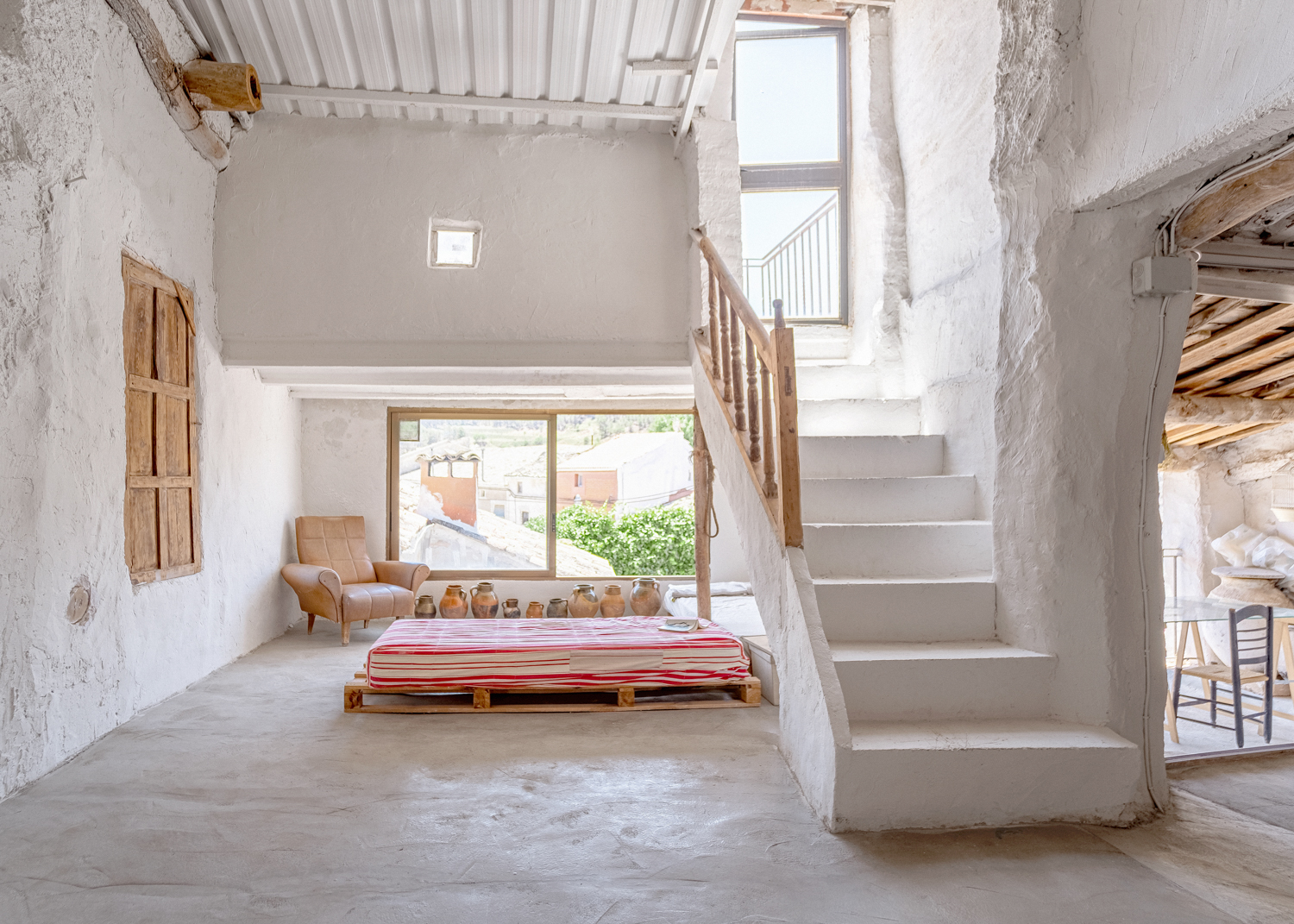
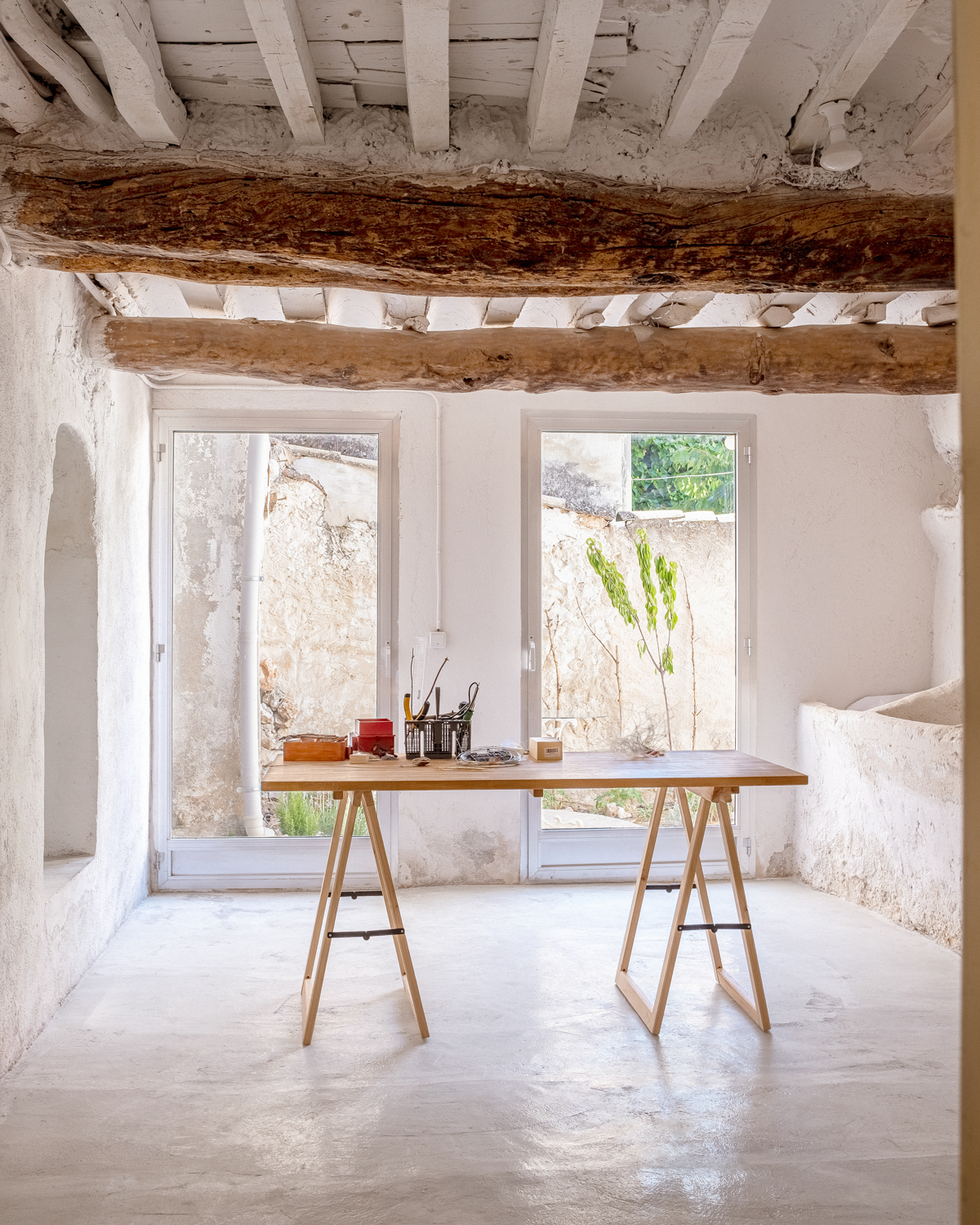
The house itself is a historical and ethnographic testimony. It has been intended to preserve not only the character of the architecture, but also the communal and environmental relationships generated by the traditional architecture of the area: the distribution based on shared interconnected alcoves, interspecies coexistence, and the use of passive architectural techniques - thick walls, sun control, temperature filters, cisterns for collecting rainwater...
Through the five main reforms carried out in the house, one can read the economic and social sequences that have transformed the dwelling over the last two centuries. Each generation has undertaken the reform that adapted the house to our needs. In all of them, the inhabitants have participated in the construction, practicing architecture as an activity rooted in connection and
interdependence.
Design and construction can fruitfully take two paths, towards beloved permanence or beloved mutability. The first path involves durable construction with elevated and refined finishes that beautify over time. The second prioritizes economy of means; the building only needs to be spacious to attract creative human occupants. Structurally, it must be robust enough to withstand significant changes of use it will attract; but the finishes are modest to invite manipulation and intervention.
For this reform, we chose the second path. It has been
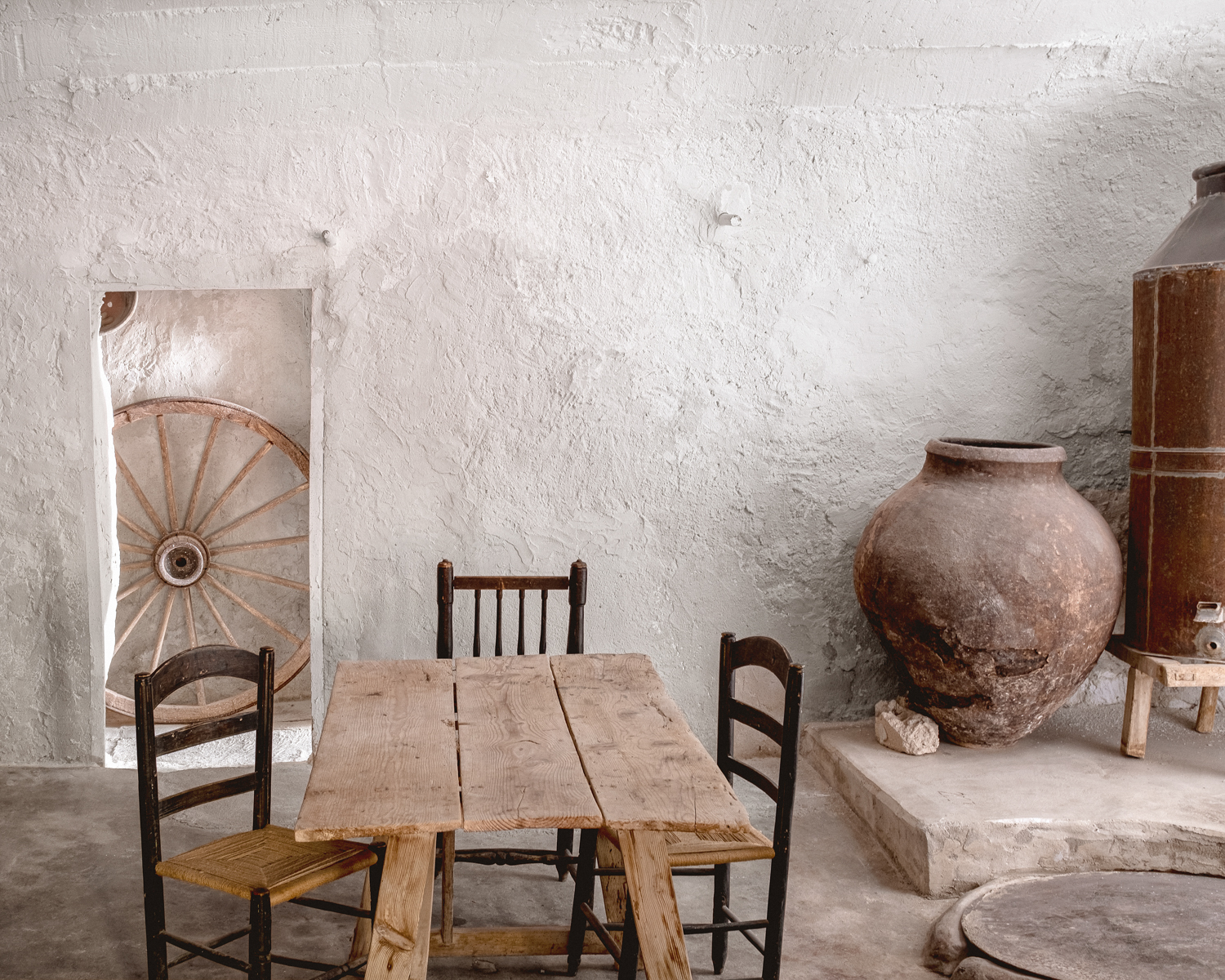
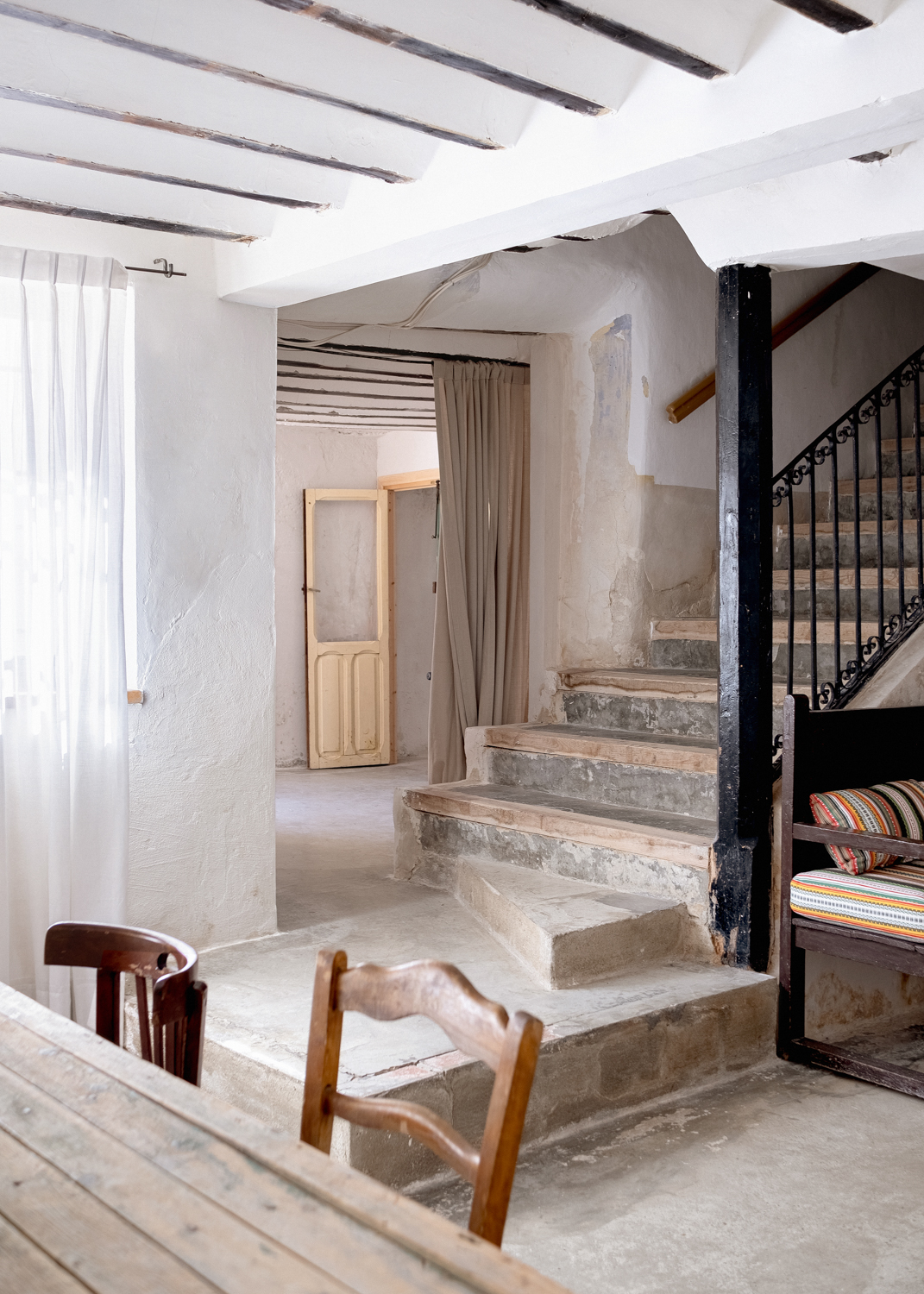
tried to show all the layers of history of the house instead of hiding them. The essence of the distribution, the traditional furniture, is preserved and integrated with recycled materials and those extracted from other works.
The project reformulates architecture as a manifestation of human power within dynamic relationships that involve both human and nonhuman entities, rather than thinking of buildings exclusively as beautiful objects. As Brand formulated in 1994, “The word ‘building’ contains the double reality. It means both verb and noun. While ‘architecture’ can strive to be permanent, a ‘building’ is always building and rebuilding. In this project, action is the result.
The house itself is a historical and ethnographic testimony. It has been intended to preserve not only the character of the architecture, but also the communal and environmental relationships generated by the traditional architecture of the area: the distribution based on shared interconnected alcoves, interspecies coexistence, and the use of passive architectural techniques - thick walls, sun control, temperature filters, cisterns for collecting rainwater...
Through the five main reforms carried out in the house, one can read the economic and social sequences that have transformed the dwelling over the last two centuries. Each generation has undertaken the reform that adapted the house to our needs. In all of them, the inhabitants have participated in the construction, practicing architecture as an activity rooted in connection and
interdependence.
Design and construction can fruitfully take two paths, towards beloved permanence or beloved mutability. The first path involves durable construction with elevated and refined finishes that beautify over time. The second prioritizes economy of means; the building only needs to be spacious to attract creative human occupants. Structurally, it must be robust enough to withstand significant changes of use it will attract; but the finishes are modest to invite manipulation and intervention.
For this reform, we chose the second path. It has been
tried to show all the layers of history of the house instead of hiding them. The essence of the distribution, the traditional furniture, is preserved and integrated with recycled materials and those extracted from other works.
The project reformulates architecture as a manifestation of human power within dynamic relationships that involve both human and nonhuman entities, rather than thinking of buildings exclusively as beautiful objects. As Brand formulated in 1994, “The word ‘building’ contains the double reality. It means both verb and noun. While ‘architecture’ can strive to be permanent, a ‘building’ is always building and rebuilding. In this project, action is the result.
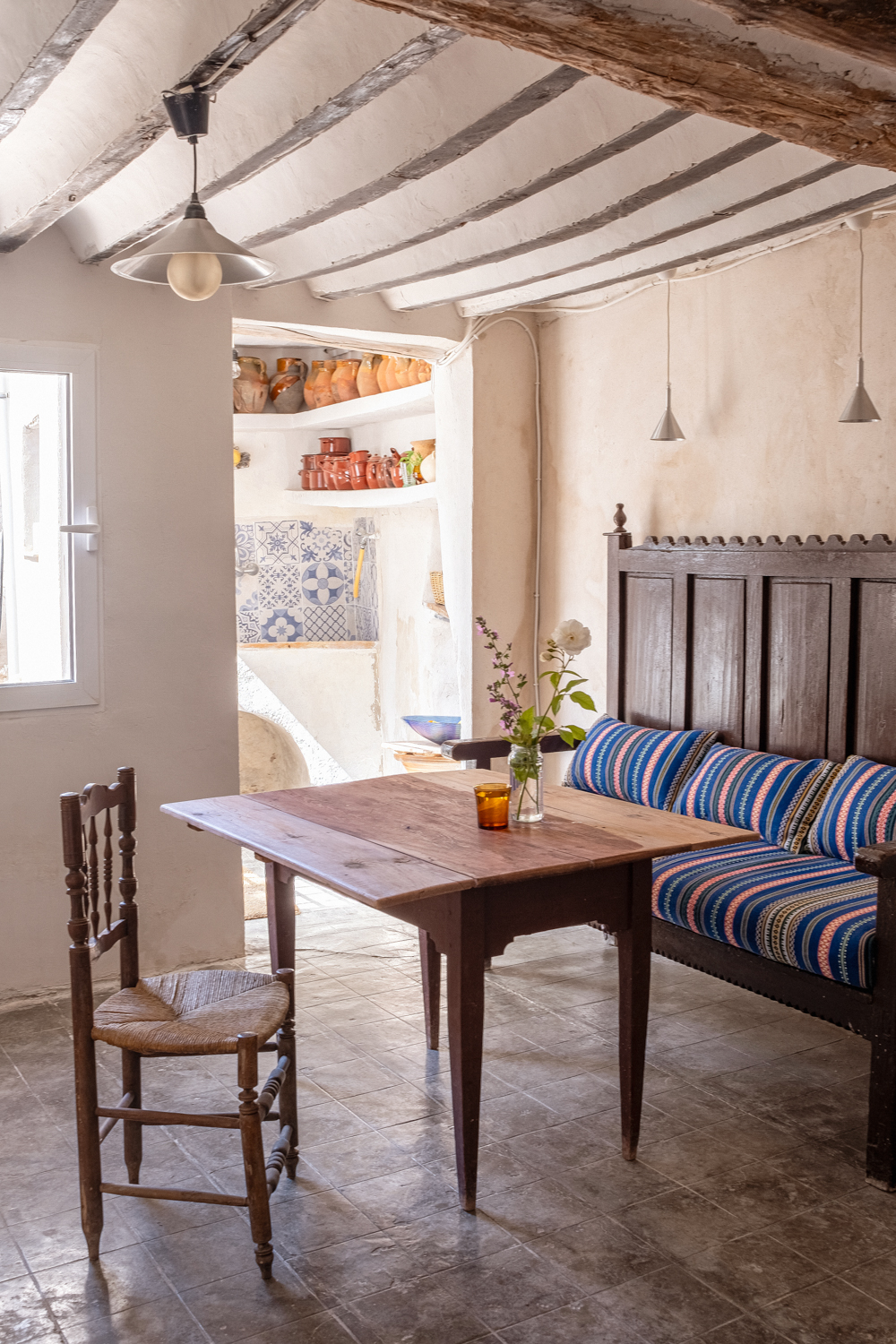

La Gascona is a personal and professional endeavor that sees life in all its material and organizational aspects as an opportunity for change.
The house and the residence seek to experience a lifestyle with a greater social orientation. Sharing as a way of life requires a small effort.
Pier Vittorio Aureli in his manifesto ‘Less is Enough’ (Menos es suficiente), 2013, suggests that coexistence demands less individual freedom, although that may not be a bad thing.
The question is whether such lifestyles should only be developed out of economic necessity, or if it is only through sharing and coexisting that we can become “social individuals”: individuals who only truly become so among others.
In this case, less precisely means recalibrating a form of reciprocity that is no longer driven by possession, but by the act of sharing. Saying “enough” means redefining what we really need to live a good life.
The house and the residence seek to experience a lifestyle with a greater social orientation. Sharing as a way of life requires a small effort.
Pier Vittorio Aureli in his manifesto ‘Less is Enough’ (Menos es suficiente), 2013, suggests that coexistence demands less individual freedom, although that may not be a bad thing.
The question is whether such lifestyles should only be developed out of economic necessity, or if it is only through sharing and coexisting that we can become “social individuals”: individuals who only truly become so among others.
In this case, less precisely means recalibrating a form of reciprocity that is no longer driven by possession, but by the act of sharing. Saying “enough” means redefining what we really need to live a good life.